Monday, April 16, 2012

Chapter 10: Family Expenses

Below is a list of what I believe a family of four would use their money on expenses:
Food: $1680 (about $140 a month)
Clothing: $350
Health Insurance: $2688 ($224 per family member with Health Partners)
Housing: $10,200 (around $850 a month in a one level, two bedroom town home in White Bear Lake)
Electricity Bills: $1440 ($120 per month)
Car Insurance: $1200 (roughly about $300 a month for two cars)
Gas: $1620 (about $135 per month for both cars)
Day Care: $1892.04 ($157.67 per month around the metro area)
Cell Phones: $960 ($80 per month for prepaid phones)
Entertainment/Miscellaneous: $900 (around $75 a month for family time)
TOTAL FOR ONE YEAR: $22,930.04

My ideal calculations for a family of four is a bit over the governments official poverty line by $817.04. The first thing I would decrease is the car insurance for both cars. Next, since gas isn't cheap, I would drive less and/or coupon for cheaper gas for the family. Going along with couponing, I would coupon for my family so other necessity's would last longer meaning I would get more for less. The two pictures below are photos from a friend I know who coupons and saves money from buying food and/or home necessities such as detergent, medicine, diapers for baby needs and etc.
Moreover, for cell phone bills, I would get a lower phone plan that has a certain amount of minutes and text so it would be cheaper for both phones. In addition, rather than taking the 3 year old to day care, I would ask family members to help baby sit or if both parents had different shifts for their jobs then they would be able to switch off watching the toddler.
I believe from this family, you know when you're not officially poor is when you're still able to afford having family time rather than working all day and night. Also, knowing that your family is still able to shop comfortably without having to budget too much money is good because it means that you have a little extra cash to buy little things for the family and even yourself. However, they're not able to sustain such a comfortable life when they're not able to buy their own home but having to live in a town homes. Although town homes aren't bad, it would be better to own your own home so your kids would be able to play freely in their backyard. In addition, not being able to stay in one place would be hard if you have to constantly move from one house to another due to the price increase of homes or even job transfers. Depending on where you live, the poverty line may affect your child's education and growth if the society they are around is not an appropriate place to learn from. Lastly, as the child grows older, if you live in a neighborhood where the stores/jobs are running out of business then it would be harder for them to find a job around home if they want to stay around where they grew up.

Sunday, April 8, 2012

Social Structure of Education

As a student, there are many ways in which I am impacted by the structure of education. Growing up, I was taught that I did good or bad in a class was by the letter grade I've received, however, in recent years I've started to question the system of why I, as a student, must be evaluated on a grade scale. I would question "What if I put a lot of effort into this one project but still get a bad grade?" then the next question that would come along with that was, "Am I not smart enough?" and along comes many more unanswered questions. From this system, I believe some teachers can tell if a student had put effort into a class project, however, take art class as an example, what if one student was better in drawing than another student, but the student who wasn't as good put in more effort? I think it would be unfair of the teacher to grade both students without seeing each of the students effort.
From the video above, it proves a good point about effort and how it is used in the real world. If a student doesn't put in any effort but still get a good grade, in the long run they may have their mind set to not putting in any effort at all and if that was to happen then in the real world they may have a lot of complications. Furthermore, it leads back to the grading system that us as students are at times too use to that we forget to compare it to the bigger picture: jobs, careers, families, friends, life, and etc. In my opinion, I view the grading system as a "system that is not in-depth enough." 
I think there can be changes to the grading system or maybe not even having the grading system at all, because when students know that they are being graded, some can do the work only for the good grades and by getting the good grades some are willing to cheat just to pass a class. By cheating, the student wouldn't learn anything about the subject but rather to just finish the work. 
Although the grading system is very helpful in determining who is intelligent and who is not, and/or which class fits best for them, the mind set of students can cheat the system in many ways. Moreover, no system is perfect but I hope the structure of education can find a way to improve the grading system and how it is used.
An interesting article on the disadvantages of the Grading System:

Monday, April 2, 2012

Social Deviance

In Chapter 8, I enjoyed the Deterrence Theory because I believe everyone goes through it. For example, the other night, I asked my friends if they have ever seen or heard about a fight happening in college and they told me that they had a friend who fought at a community college just because someone was bothering them. In the end, the friend got expelled for starting the fight. From this incident, the friend made a rational decision without calculating their potential costs and benefits. Its interesting because from this story, it contradicts the deterrence theory in the book, that "if the costs exceed the benefits, the theory predicts that we'll decide it's not worth the risk (van den Haag, 1975)." However, as the individual grows older, they mature and learn from their mistakes to not make the same mistakes for future.

In addition, when thinking about the deterrence theory, I think back to theft and why people steal. To rob anyone or anything in general can be very risky, yet if the offender/robber gets away with it then it would be a win situation, which in return they may do it more knowing that they won't get caught for it so they would risk their chances to steal again. For example, this year at Hamline University, robbery around campus have increased. Although I am unsure if it was caused by the same person, from what I heard, none were caught so far so from their perspective they believe they would benefit from stealing without getting caught. The link below gives some stories relating to theft and how it was resolved.
http://www.startribune.com/local/west/144168415.html
After reading a few stories, you start to see a pattern that when there are no arrests in return that theft would normally increase.

Friday, March 16, 2012

Family and Values

Family is a big word to unpack since the word "Family" is used so loosely, for example, I can be labeling my best friend as part of my family since we're so close. In comparison, how David M. Newman explains that in everyday usage, people may use the word family more loosely to describe those with whom they've achieved a significant degree of emotional closeness and sharing, even if they're not related. Although I may see it that way, I also believe that family is when you're blood related to one another. I think it's interesting when some people say that "Blood" is thicker than "Water," meaning that family is stronger than friends. However, from this example, I could agree and disagree with it.
Furthermore, a family are those who lives under the same roof together. However, it is a different story when you're living in the same roof with  roommates/friends since you're not blood related to them in any way. Adding on, in my opinion, a family is made up of family members who don't have to worry about who they are in front of each other. Society, such as local, state, and federal governments, also define family by managing many programs that provide certain benefits only to groups they officially define as "families." In addition, every family has their own values, depending on how your parents were raised, your family may have different values. On another note, I believe your culture and religion also plays a major role on how you are towards each other. For example, in my family, they value a daughter who studies hard in school and focuses on family. Rather than letting me explore the world and different cultures, my parents would prefer me to stay at home and explore my culture, such as, learning how to cook our traditional meals and learning more about my religion. Like I said, culture and religion plays a big role in my parents values is because in my culture, another man's family would be more willing to agree on marriage of a woman who know's how to cook and clean.
Above is a video that I think would be interesting to watch, although Hmong people don't have a particular food of their own, we like to combine foods from different Asian groups into our own. It is a video showing how to make Kapoon. This is one of our traditional dish that we would usually cook for celebrations, although there are many more meals to learn. To the right is a photo of my mom, me,  and my younger siblings on Christmas. Moreover, my family values privacy between one another but also to be there for one another when they're in need. Although it may be tough being family, and everyone has their up's and down's, we were taught to stick together through the end. If you think about it, it is like a chain reaction, once one goes down we all go down together but we support and rely on each other to get back up!


Sunday, March 11, 2012

Supporting Identity

To manage the impressions that people have of us, I believe is a process depending on first impressions, or in other words, impression formation. Going off of the sociology textbook by David M. Newman, impression formation is when we form an immediate impression based on observable cues such as age, ascribed status characteristics such as race and gender, individual attributes such as physical appearance, and verbal and nonverbal expressions. For example, since I'm part of a football team, one way to manage our impressions of others is that we have to be able to uphold a strong and positive image so other teams wont look down on us. Although we have a disadvantage compared to other teams since we are younger and have less experience, when we are on the field competing with another team if we play fair with other teams and those older then us, then we would be more respected. This situation can be engaged to impression management since we present ourselves in a favorable way to the public so we can get more positive judgments. However, if we played with unsportsmanlike conduct then other teams would look down on us and disrespect us, in conclusion to negative judgments. Below are pictures of my team and another team. Between the two pictures, my group has younger girls who are still in high school with less experience compared to the other team who has older girls with more experience.
My Team and I
An opponent Team

In addition, when meeting a new guy or girl, if you ever go out on a date, you wouldn't randomly fart in front of your date because it would be rude and embarrassing. Although we all know that its natural, impression management would limit you to do such things if you wanted a positive feedback from that person, in other words, if you wanted a second date. Below is something I found a bit amusing and quite funny!


Sunday, March 4, 2012

The Development of Role Taking

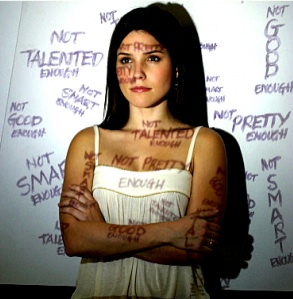
In chapter 5, I find the topic "The Development of Role Taking" very interesting because as you observe people around you growing up, you start to notice that everyone's identity is combined through their experiences which makes them who they are. For example, if a person was to be labeled or seen from other people's perspective that they aren't pretty, not good enough, or not smart enough, then the person being labeled would change their own behavior just to fit in, known as role taking. I find it interesting because it is obvious but not a lot of people realize who or what they are until they hear it from others and it can either be true or false.
Next, the "Play Stage" discusses young children's and how they develop taking the perspective of one person at a time. Then, the "Game Stage," when children's first begin to participate in organized activities such as school events and team sports. However, I think what makes a kid a kid is when they are in their play stage because they are not able to tell whats right from wrong in public places or just in front of other people. Furthermore, when a child is at the game stage, those around them starts to notice that the child is maturing when they start to take sports and other things serious. I believe these two stages are very important because they determine the child's growth from being a baby to a young teen.
Lastly, we have the "Generalized Other," the perspective of society and its constituent values and attitudes. This idea expands as the child grows to experience with others and help matures the child in their growth of experiencing with society. In addition, I believe the idea of generalized other relates to the societies expectations of you and what you should become. All of these ideas plays a big role in who you are because through these experiences, as you grow older, you may have good or bad experiences relating to family members and friends, or maybe worse, spiders! For example, if a child had a bad incident with spiders, they would grow up hating it or liking it if they overcome their fears of spiders. 

Sunday, February 26, 2012

Disturbing/Contributing to the Norm

To a lot of people I am known as the talker who usually carries on the conversation and who can talk on and on about anything. Throughout the week and the weekend, I didn't do any major act to disturb the norm of people in my life.  However, last week, while my roommate was doing her homework and I was getting ready to go to my volunteer position, I asked her how she was doing, how her family was doing, how her classes and homework was coming along and many more questions relating only to her. As she talked, I just listened very closely and observed without talking back besides replying from here and there.
As our conversation was coming to an end, she stopped and asked me why I was asking her so many questions and why I wanted to know so much. By this time I was chuckling a little to myself because I was pretty convinced from the questions I asked her that I sounded like a total creep, so I told her that I wanted to ask not because I was stalking her but just because I felt that I wanted to catch up with her and how life was treating her.
My roommate and I are very close, however, I caught her off guard when I didn't talk as much and just listened patiently. It was really interesting to listen rather than talk because it showed me another side to being quiet. In addition, I was able to observe my roommate and learn more about the way she thinks and take things in. From this experience, I didn't disturb the norm of society but the norm of my life.
Because I didn't talk as much as I usually did, my roommate tried normalizing the situation by asking me why I'm asking so many questions about her and from this experience, I liked how it was something out of the unusual to do because I was able to catch her off guard. Furthermore, I don't think it was an uncomfortable task because I enjoy learning from different perspectives.